
It seems like it’s every day that the internet serves up something new that brands apparently need to pay attention to. A hyper-specific aesthetic becomes the next big “core”. A product nobody had heard of 6 months ago starts appearing in every trend presentation, innovation workshop, and slightly panicked conversation about what Gen Z wants now.
So teams spring into action. The trend gets added to the pipeline as a new product, service, or comms strategy before the brief even gets written, and brands race to reach the shelf before the moment passes.
But the problem is, by the time something launches, everyone else has already moved on.
This is what’s called trend chasing: the strategic whiplash that comes from treating every burst of attention as a long-term growth opportunity. But trends themselves aren’t the enemy. They can be incredibly useful signals; the mistake is confusing the signal for the strategy.
Trends Show What. Cultural Shifts Explain Why.
So what’s the difference? Well, trends are basically visible expressions of behavior. They tell us what people are talking about, buying, sharing, wearing, eating, or mocking on the internet this week. They can help brands participate in a timely conversation, understand the language of a subculture, or spot an emerging behavior before it becomes mainstream.
But trends can also peak and fade into the abyss in mere weeks. That makes them a risky foundation for an innovation pipeline that may take months (or sometimes years!!!) to reach the market.
Cultural shifts move differently.
They’re deeper changes in people’s values, expectations, pressures, and ways of living. And they explain why certain behaviors are emerging in the first place.
Put another way: If trends are symptoms, cultural shifts are the diagnosis.
The sudden popularity of a specific supplement might be a trend. The growing desire for greater agency over personal health is the cultural shift beneath it. The problem is that trends are loud, visible, and easy to point to. Meanwhile, cultural shifts are usually quieter, more fragmented, and harder to decode. But the quiet stuff is often where the more durable innovation opportunities live.
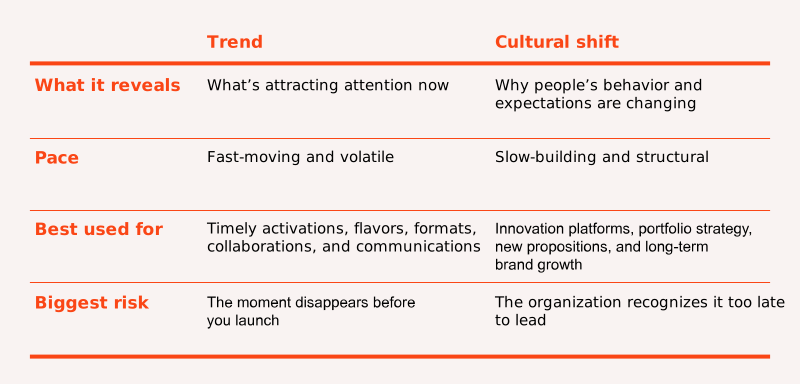
The goal isn’t to choose between trends and cultural shifts. It’s to understand the why behind what you’re looking at, and use it accordingly.
What Trend-Chasing Does to Innovation
Trends are seductive because they feel tangible. They come with search spikes, viral videos, competitor launches, and screenshots that make it easy to prove that something is happening.
Cultural shifts are more nuanced and require more interpretation. They contain contradictions. They rarely arrive neatly packaged with a hashtag and an estimated market size. But when visible momentum becomes the main source of inspiration, innovation can quickly disconnect from the people it is meant to serve.
The problem with focusing all your efforts on trends:
- Trends prioritize newness over value
Innovation isn’t valuable simply because it is new. It’s valuable when it solves a problem, relieves a tension, fulfils an unmet need, or creates a genuinely better experience.
Trend-chasing can reverse that process. Instead of asking, “What problem are we trying to solve?”, teams begin with, “How can we turn this trend into a product?”. That’s how you end up with an ingredient looking for a use case or a technology looking for a problem that requires three paragraphs of copy before anyone understands why they should buy it. - Trends create a pipeline timing problem
A social trend can move from niche to ubiquitous to deeply embarrassing in the time it takes a large organization to approve an internal concept. By the time the product reaches the market, brands can find themselves entering an oversaturated space alongside faster, cheaper, and more agile competitors – all capitalizing on something that’s ‘so last year’.
The opportunity might have been real when the brief was written. It just wasn’t durable enough to survive the development process. Repeatedly investing in opportunities that have expired by launch can also create cynicism. Teams become more risk-averse, and genuinely ambitious innovation gets replaced by safer, incremental renovation.
Stop Chasing Culture. Start Decoding It.
At The Sound, we approach innovation through the 4C’s methodology, building white spaces based on what’s emerging in culture, with consumers, in your category, and where credible opportunity lies within your company or brand.
- Culture: What broader forces are reshaping how people live, think, and define value?
- Consumer: What tensions, motivations, behaviors, and unmet needs are emerging in people’s lives?
- Category: Where are conventions becoming outdated, needs being poorly served, or competitors all making the same assumptions?
- Company: What can the brand credibly and distinctively own?
Looking through all four lenses helps us identify opportunities that are culturally relevant, grounded in real human needs, differentiated within the category, and credible for the brand. This is also where trends become useful again. Rather than automatically turning a trend into an innovation idea, we treat it as a piece of evidence.
We look across multiple signals and ask:
- What connects them?
- What deeper human need or cultural change sits beneath them?
Trends are puzzle pieces. The cultural shift is the picture they create when you put enough of them together.
From Fleeting Trend to Durable Innovation
The difference becomes more obvious when you apply it to real categories.
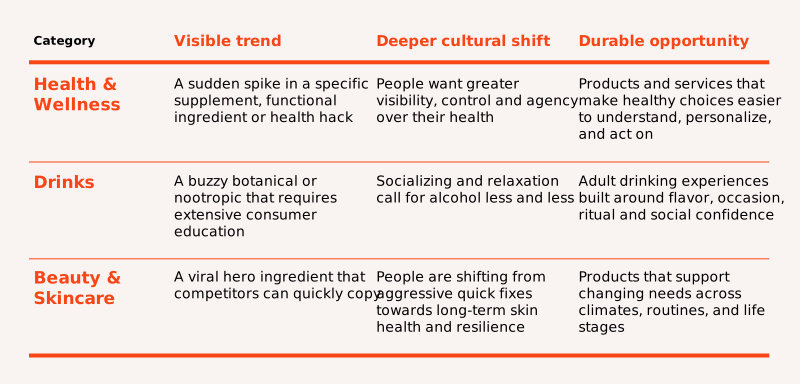
The trend may still inform the final product. A particular ingredient, format, or aesthetic can make an idea feel timely and relevant. But it shouldn’t be the only reason the idea exists.The strongest innovation uses the trend as an expression of a deeper opportunity, not as a substitute for one.
How to Audit Your Own Innovation Pipeline
Before another trending ingredient, aesthetic, technology, or behavior gets added to the pipeline, pause and ask 3 critical questions:
- Does this innovation solve a real consumer tension?
What problem does it solve, desire does it unlock or friction does it remove? - Will the underlying need still matter when we launch?
The expression of the trend may change. The underlying human need should survive the development timeline. - Why should our brand be the one to do it?
A growing market is not automatically your opportunity. The idea must connect to your brand’s capabilities, equities, and authority.
And here’s a useful bonus question: Would this idea still be compelling without the novelty?
Remove the trending ingredient. Remove the unusual packaging. Remove the buzzword. Is there still a recognizable benefit? Would a person still understand why the product deserves to exist? If the entire idea collapses when the novelty is removed, it probably isn’t an innovation platform.
Build for What Comes Next
The brands that win won’t be those that successfully predict every trend. They’ll be the ones that understand which signals point towards a lasting change in people’s lives, and where their brand has the right to respond.
Need a hand making sense of which cultural shifts matter for your innovation pipeline? We can help.

Written By:
Amber Williams
Amber has been known to hang out in cold baths reading trashy novels and nibbling on Cadbury Chocolate fingers, bouncing her insights off of her veritable legion of rubber ducks. She was featured in The Evening Standard.
More by this author