
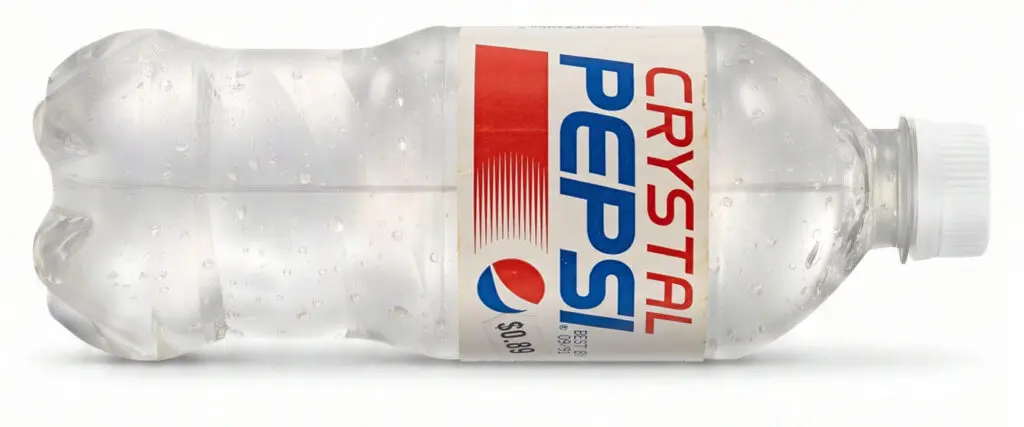
For decades, product innovation has followed a relatively predictable formula. Find an unmet consumer need, identify a pain point, improve the product, add a new feature/flavor/benefit, and then launch. To be clear, there’s nothing wrong with this approach. Many of the world’s best products exist because someone found a problem worth solving. To that point, I’m still sad that Crystal Clear Pepsi didn’t stick around…But I digress.
Recently, some of the more interesting opportunities in innovation that we’ve been seeing aren’t coming from us asking, “What problem can we solve?” – but rather: “What new occasion can we create?”.
Because sometimes growth doesn’t come from convincing people to buy a better version of something they’re already buying. Sometimes it comes from giving them a new reason to use it or experience it altogether.
Innovation has traditionally focused on improving the product, but the real opportunity to drive growth is in redefining the moment.
Most categories are built around established occasions and category norms:
- Coffee belongs in the morning.
- Dessert comes after dinner.
- Beer belongs at the bar, the game or the weekend.
- Skincare happens in the bathroom.
- A snack fills the gap between meals.
The category creates the rules, and innovation typically happens within them. A brand introduces a new flavor of yogurt. A better razor. A lighter beer. A healthier snack. A more premium version of the same product. But what happens when you stop accepting the category’s rules?
- What if coffee isn’t just for mornings?
- What if champagne doesn’t require a special occasion?
- What if pimple patches become a fashion accessory?
What if a product’s biggest growth opportunity isn’t about stealing share from a competitor, but becoming relevant in a completely new moment in someone’s life? Now, this is where occasion innovation gets interesting…because the biggest innovation opportunities often live between existing occasions.
Think about some examples of brands that have expanded category relevance by changing when and why people use a product.
Athletic Brewing didn’t just create another non-alcoholic beer. It helped make beer more relevant in moments where consumers wanted the taste, ritual and social experience of a beer without necessarily wanting alcohol.
Liquid Death didn’t simply compete on hydration. It made canned water feel culturally appropriate in places where a conventional bottle of water might not have carried the same social energy.
Functional sodas reframed a traditionally indulgent soda product around new occasions: the everyday wellness ritual or the moment when someone wants a treat that feels like a better choice.
In each of these cases, the product matters…but the real innovation is much bigger than the product itself. These brands have created, expanded or reinvented an occasion, therefore changing the “rules” of the category. And occasions can be incredibly powerful because they can persuade someone to consume the category more often – or even partake in a category they previously wouldn’t have considered at all.
This is a very different growth equation – and the reason there’s so much potential in innovating within occasions is because despite what most marketers might hope, consumers don’t actually organize their lives around categories. This is perhaps the biggest problem with traditional innovation. Most brands think in categories. But people think in moments. A person doesn’t wake up thinking, “God, you know what? I really could use a new innovation in the beverage category today!”
Instead they think in terms of moments:
- I need to wake up and feel like I can take on the day.
- I need a little energy to get through the afternoon.
- I want something to make this Tuesday night feel more interesting.
- I need something to bring to a friend’s house.
- I want a treat, but I don’t want to feel like I’m undoing my entire day.
- I want to participate in the moment, but I don’t necessarily want alcohol.
These moments are rooted in human motivations, and are much richer than categories because they reveal an underlying Job To Be Done – a tension, emotion and context surrounding consumption. And THAT creates a bigger opportunity for innovation. So, the question then isn’t: “How can we make a better snack?” But rather: “What moments in people’s lives could be improved with our brand in them?” This shift might sound subtle, but strategically, it’s enormous.
One reason occasion innovation is so powerful is that an occasion isn’t simply a time of day. It’s a combination of the context (moment), need (motivation), behavior, emotion and social dynamics.
For example, consider the difference between: “Afternoon.” and: “The moment at 3:30 p.m. when you’ve been staring at your screen for six hours, looking down the barrel of another two hours of work ahead of you, and you just want a small reset that feels like a reward rather than a break from being productive.”
Those are very different innovation briefs. The first gives you a daypart. The second gives you a human moment and motivation. And that distinction matters. Because the best opportunities aren’t necessarily hiding in the obvious gaps between breakfast, lunch and dinner. They’re hiding in the micro-moments within them.
- The transition between work and home.
- The five minutes before friends arrive.
- The post-gym wind-down.
- The Sunday afternoon reset.
- The late-night craving.
- The moment you want to celebrate something that isn’t quite worth a celebration.
These moments may not show up in traditional category usage data, but they can represent powerful opportunities for brands to drive new growth. That said, not every occasion is worth tapping into. You can’t simply point to 3:47 p.m. on a Wednesday and declare it a new consumption occasion (though that does sound kinda cute, right?). But truthfully, the strongest opportunities emerge from a clear human tension or job to be done – satisfying a desire that isn’t fully served by existing products.
For example:
- “I want to treat myself, but I don’t want something heavy.”
- “I want the social ritual of drinking, but not the alcohol.”
- “I want to eat something nutritious, but I don’t want another functional product that feels like a chore.”
These tensions are ripe for innovation because they exist between traditional category norms, and the brands that win will be the ones that don’t force consumers to choose one side or the other. The brands that win will create products – and, more importantly, occasions – that resolve the tension and satisfy the job.
This is where the business case becomes particularly interesting. The majority of product innovation today is ultimately competing for existing share of wallet or current demand. If you launch a new flavor, people might switch from one flavor to another. If you launch a premium version, they might trade up. If you launch a new format, people might choose your format over someone else’s. While these are valuable forms of growth, occasion innovation operates quite differently, because when you create a new reason to consume, you expand the entire category.

That’s why some of the most interesting growth stories aren’t simply about winning share. They’re about increasing frequency, expanding relevance and recruiting people into new behaviors. Consider the impact of making a category relevant in a moment where it previously wasn’t.
- A beverage that moves from special occasions → to everyday rituals.
- A snack that moves from hunger management → to self-reward.
- A beauty product that moves from functional care → to a nightly ritual.
The opportunity now becomes less about: “How do we get more people to buy our product?” and more about: “How do we give more people a reason to need this product?” Now that’s a much bigger strategic ambition that widens the aperture of innovation.
Speaking of widening the aperture, another reason occasion innovation is so important is that the competitive set becomes much broader than your immediate frame of reference. Anyone familiar with Clayton Christensen’s Jobs To Be Done innovation theory, understands that if you’re a beverage brand trying to own the “afternoon reset”, you’re not simply competing with other beverages – you’re competing with coffee, snacks, a smoothie, a walk, scrolling Tik Tok, a piece of chocolate, a yoga class… the list goes on. Similarly, if you’re a premium whiskey brand looking to tap into new, non-traditional whiskey occasions, then you’re not just competing with other premium brown spirits – but now you’re also competing with clear spirits, beers, aperitifs/snacks, and even non-alcoholic beverages.
In other words, this inherently challenges how we think about a brand’s competitive set and frame of reference, which in turn creates permission to borrow ideas from other categories. Pretty cool, right? In my opinion, the most successful occasion innovation happens when a brand takes a behavior from somewhere else and makes it its own. We often refer to this as referencing “mentor” brands – brands that we can borrow design principles from and then leverage in an entirely new way – in an entirely different category.
This requires flipping the traditional innovation process model on its head. Instead of starting with what type of product that should be innovated on, the focus instead should be, what moment can we own? And then ask:
- What’s happening in that moment?
- What are they trying to accomplish/satisfy?
- What tension are they experiencing?
- What solution(s) are they using today?
- What’s working/not working about the current solution?
- What out of category behaviors could we borrow or reinvent?
- What would make this moment meaningfully better?
Only then can we ask what product might bring that occasion to life? Because if you start with the product, you tend to create more products – but if you start with the moment, you can create entirely new systems of growth.
The good news is that brands don’t have to invent every new occasion from scratch. Consumers are already doing a lot of the work for us! Which is why The Sound often taps into social listening to pick up how people are already hacking the category themselves. This way, we get a window into how people are mixing products in unexpected ways, using products at unusual times, repurposing products for new needs (this is how our team came across consumers making a “Snickle”…if you haven’t heard of it, I encourage you to look it up), and communities around behaviors that brands never formally created. These behaviors are trend signals and they tell us where the category could possibly go next. The mistake that brands often make is assuming these behaviors are merely quirks (again, I refer you to the “Snickle”). Because oftentimes they’re early indicators of a new occasion – which means the innovation opportunity could be hiding in plain sight.
So rather than asking consumers what new products they want, ask and observe what they’re already doing – look for the workarounds, the rituals, the unexpected combinations. Look for the moments when people say things like: “I know this isn’t really what this product is meant to be for, but…”. That sentence is often an innovation goldmine!
Something else to think about is that occasion innovation isn’t just an innovation challenge – it’s also a brand strategy challenge.
What do you mean by this, you may ask?
Well, it’s quite simple really, because once you decide which occasion you want to innovate around / own, you must then decide what role your brand can or will play within it. This is where brand and innovation teams need to work much more closely together. The product can’t create an occasion that the brand has no credibility to own. And the brand can’t credibly claim an occasion that the product doesn’t actually make better.

The strongest opportunities happen when Brand and Innovation reinforce each other: You’ve identified a distinctive moment with a clear consumer tension + create a product that makes the moment better + find a meaningful role that your brand can play in making that moment better.
And this is where occasion innovation becomes more than a one-off product launch…this is where innovation becomes a growth strategy.
For many brands, the next breakthrough isn’t going to come from having the longest innovation pipeline. Instead, it’ll come from having the clearest understanding of where they have permission to show up next. Yes, sometimes the answer will be a better product. But sometimes the most (and I hope I’ve made the case for this) valuable innovation won’t be a product innovation at all. It will be the creation of a new ritual, a new behavior or new occasion that gives people a new reason to invite your brand into their lives.
Because while categories are finite…occasions are everywhere! And the brands that learn how to (re)invent them won’t just find new places to sell. They’ll find new reasons to matter.
So, what’s your next innovation occasion? I encourage you to explore the moments your consumers aren’t being served, the occasions your brand could own, and how you might turn those opportunities into your next wave of innovation. I’d love to hear from you and help out!

Written By:
Jerusha Bennett
Jerusha is a brand strategist with an entrepreneurial mindset and a passion for delivering innovative brand solutions that emotionally connect with people, stimulate brand growth, and drive profitability. At The Sound, Jerusha heads up our Innovation & Brand Strategy practice.
More by this author