We live in an age of defaults. Algorithms finish our sentences, recommend our entertainment, choose our routes home and increasingly influence or even decide what we buy. Predictive text has become predictive life.
At the same time, brands are pursuing a different ambition. They no longer want to win at just the transaction level, they want to become part of almost the operating systems of our everyday lives. Their goal isn’t just increased share of wallet, it’s increased share of day, and it’s becoming the default.
These two trends are unfolding independently but together they create a fascinating question. If consumers are making fewer conscious choices, and brands are working ever harder to remove the need for choice altogether, what happens to brand love?
Can you genuinely love something you never actively chose?
The loss of intent that comes with defaulting to the default, means that we’re shifting from being active creators and seekers, to more passive curators and receivers. It’s fundamentally changing how we engage with the world. Or in the words of the Cheshire Cat from Alice in Wonderland ‘“If you don’t know where you are going, any road will get you there.” Speaking to the idea that if you aren’t clear on what you want, you’ll accept anything that’s close enough, as an outcome.
And brands, with all their know how and reach, are also playing a more dominant role in co-authoring our lives. Or from the esteemed Philosopher and Sociologist, Zygmunt Bauman, one of the great thinkers of the 20th Century ‘What the culture of consumption seeks is not merely to satisfy needs, but to continuously reproduce them’
In the media world, how often do we watch the series, or listen to the song that the algorithm throws out at us? How much do we let things roll over to the next one? Short form video, whether that’s TikTok or Reels or whatever, is the epitome of that. Nobody sits down and thinks ‘‘Right. Forty-seven minutes of raccoon videos and emotionally devastating relationship advice please’, and yet… I’m sure for many of us we can recognise that outcome.
And AI obviously has a role to play in this, the more we use the likes of ChatGPT, Claude, Gemini, Alexa+ etc. to help us choose what to buy, where to go, what to watch or listen to etc. the less we’re making the choices, and the more we’re outsourcing our lived experiences to a technology that’s designed to revert to the norm, to provide the statistically most ‘correct’ or likely response. From an individual user perspective, that can be great, it gives us answers, content and output that is likely good enough, most of the time. But What does it mean at the cultural or societal level when this decline in intentionality becomes the norm?
The big brands that drive lots of categories and that we all likely engage with sometimes, think Google, Amazon, Netflix… all have mechanisms that embed this loss of intentionality across the user experience. Google searches that auto-complete, Amazon buy again buttons or Amazon Choices, to Netflix’s autoplay feature – with CEO Reed Hastings famously saying ‘we compete with sleep’.
“You know, think about it, when you watch a show from Netflix and you get addicted to it, you stay up late at night. We’re competing with sleep, on the margin. And so, it’s a very large pool of time.”
Competing and winning, because there’s no massive marketing budget for 8 hours of good rest and recuperation.
When we think about the choices we make in our day to day life then, it feels like we’ve gone on a huge journey over the last few generations. Go back a couple, and the lack of choice didn’t come from the choice being made for us, there was just much… less. Four TV channels only, showing ‘Live’ TV, with no on-demand; compared to now and the infinite channels we can access on YouTube, and the vast landscape of different content providers, and everything available whenever we want it.
Or elsewhere in the food and drink category, with fewer cuisines and ingredients to choose from and food choices made more on availability, and less as part of our identity formation and signalling; supermarkets with maybe 3,000 SKUs, rather than a 100,000.
Historically culture has always grown from the edges, pushing outwards from the mainstream, not gravitating back in towards it. Again I think it’s an interesting question to think about, what does it mean for society and culture at large to be in the midst of an era of turning in on ourselves, rather than looking out to the horizons? And while we might be quick to blame AI for being the trigger for this sort of cultural collapse, it actually started before AI took hold. The brilliant writer Adam Mastrioani coined the phrase ‘Cultural Scurvy’ back in May 2022 to describe the phenomenon whereby increasingly, across culture – movies, books, gaming, literature and music, the charts are filled with sequels, spin offs and prequels to a degree not seen before – new IP is the riskier choice in the context of just extending a much loved franchise and making Toy Story 5 – our cultural diets have narrowed.
As a modern consumer, it can feel increasingly hard to remain the author of our own lives, when so much is geared towards removing friction, driving decision making, and increasingly, locking us in.
Another thing to think about with this, is what does the future look like? The noise fluctuates on a monthly basis, but there’s still a lot of talk about the inevitable rise of Agentic buying – the idea that soon enough we will all be able to use AI powered ‘Agents’, who based on getting to know our preferences and needs, will simply be able to act on our behalf; buying things, arranging services, booking tickets and so on – in that world, the loss of intent isn’t just quietly happening in the background, it’s been fully productised itself, it’s loss of intent as a feature, not just as a bug.
Which takes us to the 2nd point, the addition of 2 dots… from transactional full stops, to ongoing ellipses. From auto-completion of individual lives, to Continuation Culture for society at large.
Historically, brands were defined by what they made and sold. A sports brand sold shoes. A retailer sold books. A technology company sold computers. Their role in your life was specific, limited, and intermittent. You bought the product, the interaction ended. A full stop. Not because anything had gone wrong, but that was just the space that brands took in peoples’ lives. For the most ambitious brands though, their goals have evolved to focus on creating more of an ongoing loop, a relationship that continues. Ellipses. In pursuit of greater financial reward, the most successful brands are asking a different question, not ‘what more can we sell’ but ‘where else do we have permission to show up in peoples’ lives?’
These brands are no longer confined to their origin story categories. They’re building something closer to environments, infrastructure — systems that span multiple touchpoints, and create more opportunities for continuation. Every new surface area is another place where the loop can continue.
And this is where it connects directly back to the earlier questions about choice. As brands expand their footprint, they appear in more moments, become more familiar, and require less active consideration. They shift from being one option among many, to being the default path. You don’t decide to use them each time. You simply continue as part of the experience that you’re already engaged in. The most successful brands aren’t just growing their market share. They’re growing their share of your day.
It’s probably worth thinking about these loops in a couple of different ways. On the one hand, we can view them with a more negative tone, framing them in terms of the creation of dependency on the system, or behaviours that too easily become the default, even against our better instincts. Looked at from this perspective, should this pursuit of ever more ‘share of life’ come with a long term health warning for brands. We’re already seeing push back from some consumers, rejecting brands not on the quality of the product or proposition, but on concerns about their over reach, directly wanting to put brands back into the product sphere, rather than facilitating too much presence. Not wanting to be overly reliant on brands that have been allowed the equivalent to an all access pass into our lives and culture.
I can’t help wondering if there’s an alternative version of this Continuation Culture, and one that’s built from a more positive standpoint. Is there a sweet spot that both creates the largest possible footprint for engagement, whilst simultaneously making it a more positive value exchange for the consumer? What would that look like? Health and Wellness brands potentially operate in this space, taking the Nike example above, each session inspired, coached, facilitated, moving the consumer forward, quite literally towards their goals? Something like Duo Lingo or HeadSpace, improving language skills or mental health? It’s easier to see the potential there, than perhaps for brands operating in other spaces. Though as discussed already, the era of brands operating in siloed categories feels more in the past than ever before.
So, assuming not much changes in the short term, what does it mean when culture and consumers are faced with this pincer movement of change; on the one side, a loss of intentionality about choices and behaviours at the individual level, and on the other, the full power of the brand and marketing industry looking to ever further co-author culture and individual lives? Both turbo-charged by the potential disruption of AI.
What spaces does that leave? What directions does that take us in? How should brands act? Should they lean into the status quo of searching for new surfaces to show up in? Should they aim for building capability in their consumers, not dependency? Should they do both? Something different?
Lots of questions.
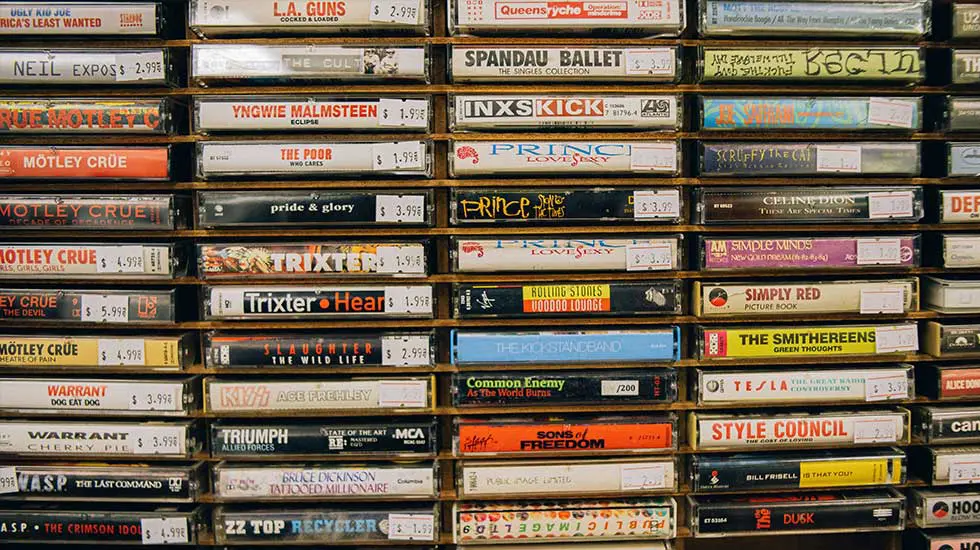
As ever, I’m not going to pretend to have the answers, but I was fascinated to see the recent Pinterest ad which felt like it was speaking directly to this topic. I don’t know if you’ve seen it, it’s called ‘How did they do it?’ a montage of clips from the 70s through to the 90s, the pre-tech and social media era, reminding us that people could live their lives and make choices, without having to be told what to do. It closes with the rather relevant line: ‘How did they know who they were, without the rest of the world telling them?’
Perhaps a signal that for brands, there’s mileage still in supporting people to actively choose your brand, rather than becoming so much of a default that not only are you making it an inevitability, but you risk becoming so invisible that they stop even seeing you.
And maybe that’s the final point here – at The Sound we do a lot of work with brands helping them to understand brand love, where it comes from, what it means, how to drive it and how to communicate about it. But it strikes me that in the era of both Loss of Intent and Continuation Culture, brand love is maybe harder to win? At risk even?
How can you fall in love with a brand, if you didn’t even choose it in the first place?
There’s a risk that your brand becomes so automatic, the consumer so detached from the decision making process, that it stops being a choice at all, and instead become invisible, lost, forgotten?
For brands then, perhaps the thing to think about isn’t ‘How can we quietly take up more space in consumers’ lives?’ but ‘How can we stay more meaningfully front of mind?’
Two questions that might lead down similar paths, but through completely different lenses.